
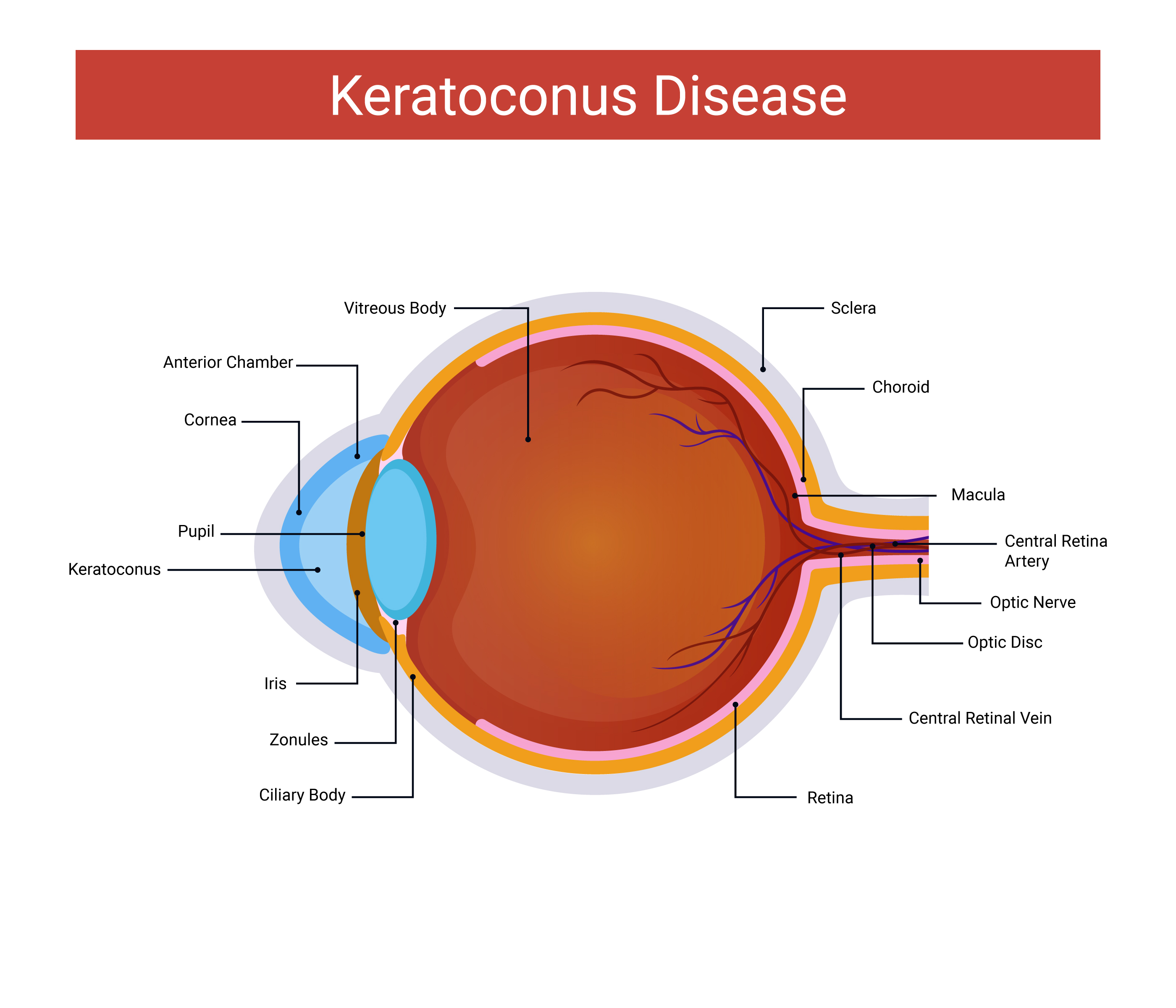
What is Keratoconus?
Keratoconus is a condition that affects the cornea, which is the clear front part of your eye. In this condition, the cornea becomes thin and weak. As a result, it bulges outward, forming a cone shape. Because of this change, vision can become blurry or distorted. Keratoconus is not rare, but early detection is important. Many people do not notice the early signs of keratoconus. However, with the right care, you can manage this condition and protect your vision.
Early Signs and Symptoms
Recognizing the early signs of keratoconus can help you get treatment sooner. For example, you may notice changes in your vision that do not improve with glasses. Early symptoms often include:
Sometimes, you may also see halos or glare around lights. If you notice these signs, it is important to see an eye doctor soon.
Causes and Risk Factors
While the exact cause of keratoconus is not fully known, several factors can increase your risk. For instance, genetics play a role, as the condition can run in families. Other risk factors include:
Additionally, some studies suggest that environmental factors may also contribute. However, more research is needed to understand all the causes.
Diagnosis of Keratoconus
Early diagnosis is key to managing keratoconus. Usually, an eye specialist will perform a detailed eye exam. This may include:
Because keratoconus can progress over time, regular check-ups are important. Early detection allows for better treatment options and can help slow down corneal weakness.
Treatment Options for Corneal Weakness
Treatment for keratoconus depends on how severe the condition is. In the early stages, glasses or soft contact lenses may help. However, as the condition progresses, other options may be needed. Some common keratoconus treatment options include:
For those seeking keratoconus treatment in their city, many eye clinics now offer advanced care. Always discuss the best option with your eye specialist.
Lifestyle Tips and Prevention
Although you cannot always prevent keratoconus, certain steps may help protect your eyes. For example, you can:
Moreover, early action can help slow down corneal weakness. If you notice any changes in your vision, do not wait to seek help.
When to See an Eye Specialist
If you experience any early signs of keratoconus, such as blurry vision or frequent prescription changes, it is important to see an eye specialist. Early diagnosis can make a big difference. In addition, if you have a family history of corneal weakness, regular check-ups are wise. Remember, timely care can help protect your sight and improve your quality of life.
For personalized advice on keratoconus and corneal health, consult an eye specialist Dr. ANURAG KUMAR KASHYAP today.