
What Is Myopia?
Myopia, also called nearsightedness, is a common vision problem. People with myopia see close objects clearly, but far objects look blurry. According to the World Health Organization, myopia rates are rising worldwide. In many cities, more children and teens are being diagnosed each year. Because of this, myopia management has become very important for families and eye care providers.
Importance of Myopia Management
Proper myopia management can slow the progression of nearsightedness. When left untreated, myopia can lead to serious eye health issues later in life. For example, people with high myopia have a higher risk of retinal detachment, glaucoma, and cataracts. In addition, regular care helps maintain good vision and quality of life. Early action is key to protecting your eyesight.
How Regular Eye Checkups Help in Myopia Management
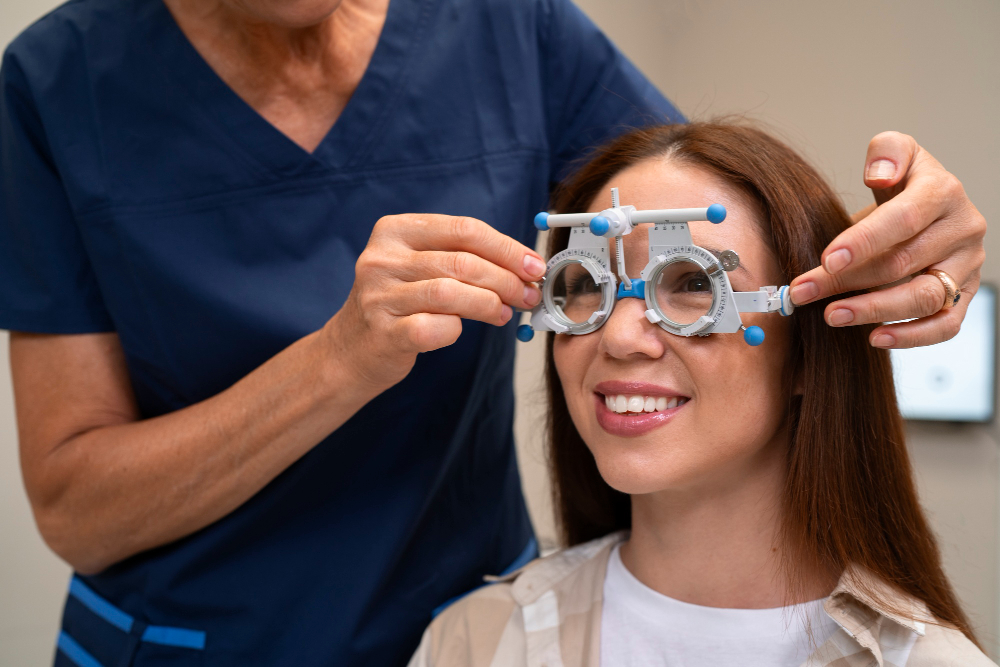
Regular eye checkups play a vital role in myopia management. During these visits, eye doctors can spot changes in vision early. As a result, they can adjust treatment plans quickly. In many cases, early detection helps prevent further vision loss. For children, yearly eye exams are especially important. This is because their eyes are still growing and changing.
Symptoms and Early Signs of Myopia
Recognizing the early signs of myopia can help families seek care sooner. Some common symptoms include:
However, not everyone notices symptoms right away. Therefore, regular vision screenings are important for all ages.
Diagnostic Methods for Myopia During Eye Checkups
Eye doctors use several methods to diagnose myopia during checkups. For instance, they may use:
Because these tests are quick and painless, they are safe for both children and adults. Early diagnosis helps guide the best myopia management plan.
Treatment Options for Myopia
There are several ways to treat myopia and slow its progression. Some common options include:
Because each person is different, eye doctors create a treatment plan based on age, lifestyle, and vision needs.
Lifestyle Tips for People with Myopia
Healthy habits can support myopia management and overall eye health. For example, you can:
Additionally, using good lighting while reading or working helps reduce eye strain.
Preventive Strategies and the Role of Early Detection
Preventing myopia or slowing its progress is possible with early action. For instance, regular eye checkups help catch vision changes before they get worse. Parents should schedule yearly eye exams for their children, especially if there is a family history of myopia. In many cases, early treatment can protect long-term eye health.
Consult Dr. ANURAG KUMAR KASHYAP for eye problems and their solutions.